

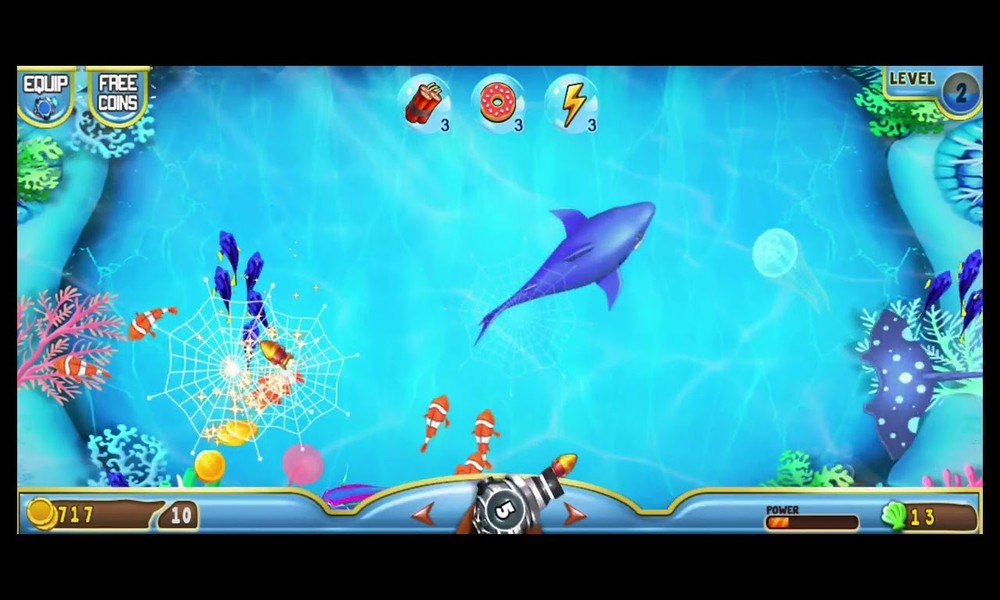
Chain reactions stand apart from standard eliminations in fish shooting games they are not accidental outcomes but the result of deliberate positioning and shot timing that only develops through genuine session experience. Players who have invested time in chơi bắn cá online recognise chain reactions as one of the highest-return mechanics available within a round, precisely because they require a level of screen reading that casual play rarely produces on its own. Chain reactions, amplifying returns, and favouring players with developed instincts are all topics worth examining in detail.
Clusters create opportunity
A chain reaction occurs when a single shot eliminates a target close to another, triggering further eliminations. Spatial targets must be grouped tightly enough so that the elimination effect from one kill carries across to adjacent creatures. Screens with dense fish clusters present chain reaction opportunities that sparse screens do not offer, which is why experienced players pay close attention to how targets are distributed before committing shots.
Screen reading at this level involves more than identifying a cluster. The direction targets are moving, the speed of their trajectory, and how tightly grouped they remain over the next few seconds all determine whether a cluster holds long enough for a chain reaction shot to land at the right moment. Players who develop the habit of tracking movement patterns alongside cluster density find chain reaction opportunities far more frequently than those focused purely on individual target elimination.
Timing drives outcomes
Fire into visible clusters rather than positioning a shot for a chain reaction. Shooting too early produces the reaction before targets tighten into the formation, while shooting too late causes the cluster to disperse. A consistent hit requires the kind of timing that only repeated session experience can build.
The cannon level in use also influences timing decisions. Higher-level cannons eliminate the initial target faster, which reduces the window available for the chain effect to propagate across adjacent creatures. Lower-level cannons may require more shots to land the initial kill, but allow more time for the chain to develop once the first elimination occurs. Managing that relationship between cannon power and chain timing is a layer of skill that separates players who trigger chains occasionally from those who do so with consistent intent.
Skill compounds returns
Chain reactions generate returns proportional to the targets caught and eliminations generated. In the case of a cluster of mid-to-high value targets, a single chain reaction delivers a larger payout than a series of isolated shots. The resource cost per elimination drops sharply when a single shot or burst causes multiple kills.
This is why chain reactions reward skilled players disproportionately. The mechanic itself is available to every player in the room, but extracting consistent value from it requires:
- Developed screen reading that identifies cluster formation before the opportunity closes
- Timing precision calibrated to cannon level and target movement speed
- Shot placement that accounts for the target trajectory rather than the current position alone
- Selective patience holding shots during sparse screens rather than firing continuously and missing chain windows as clusters form
Chain reactions represent the point where fish shooting game skill becomes measurable in return rather than simply observable in play. Players who build the screen awareness and timing precision the mechanic demands extract session value that reactive shooting cannot replicate across the same round conditions.
